
Last updated August 27, 2026
Free in-home measure and quote - PGT, CGI and CWS impact lines compared on your actual openings, style by style




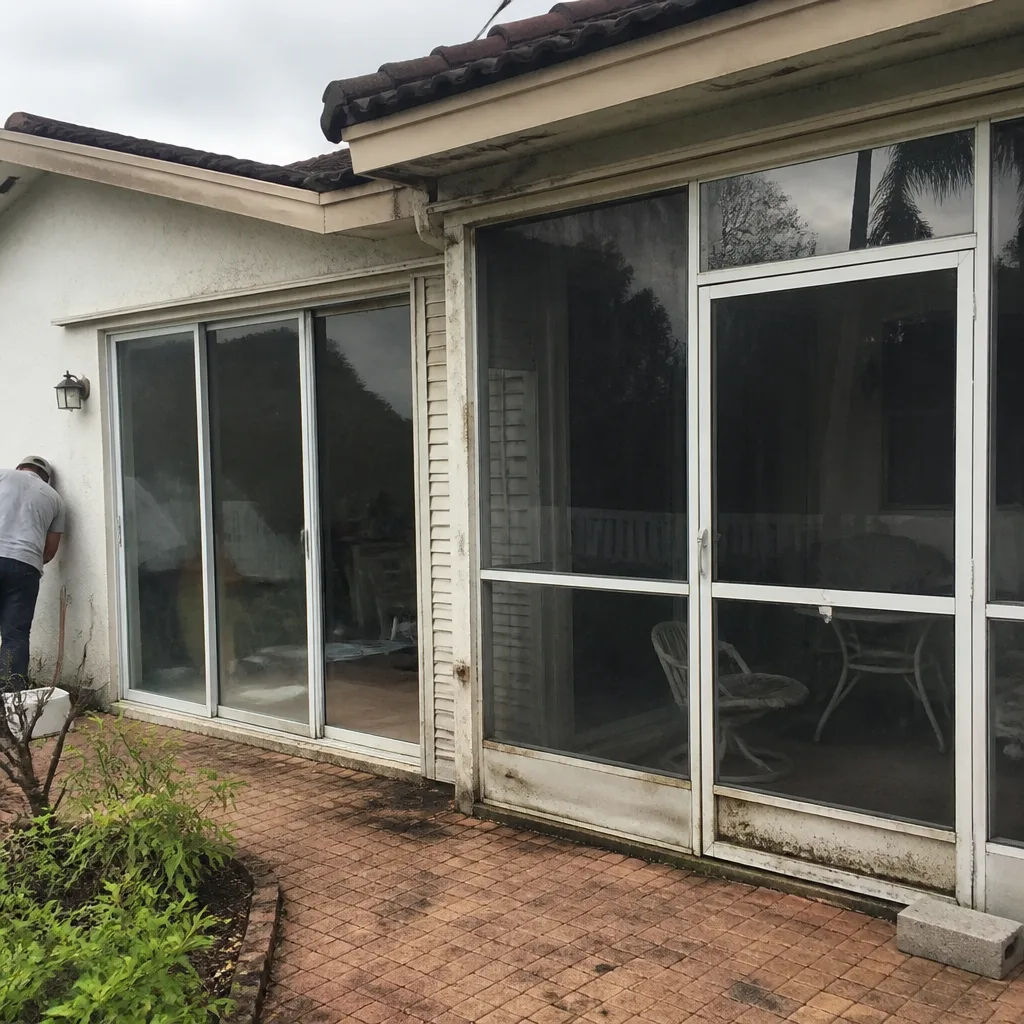 Before
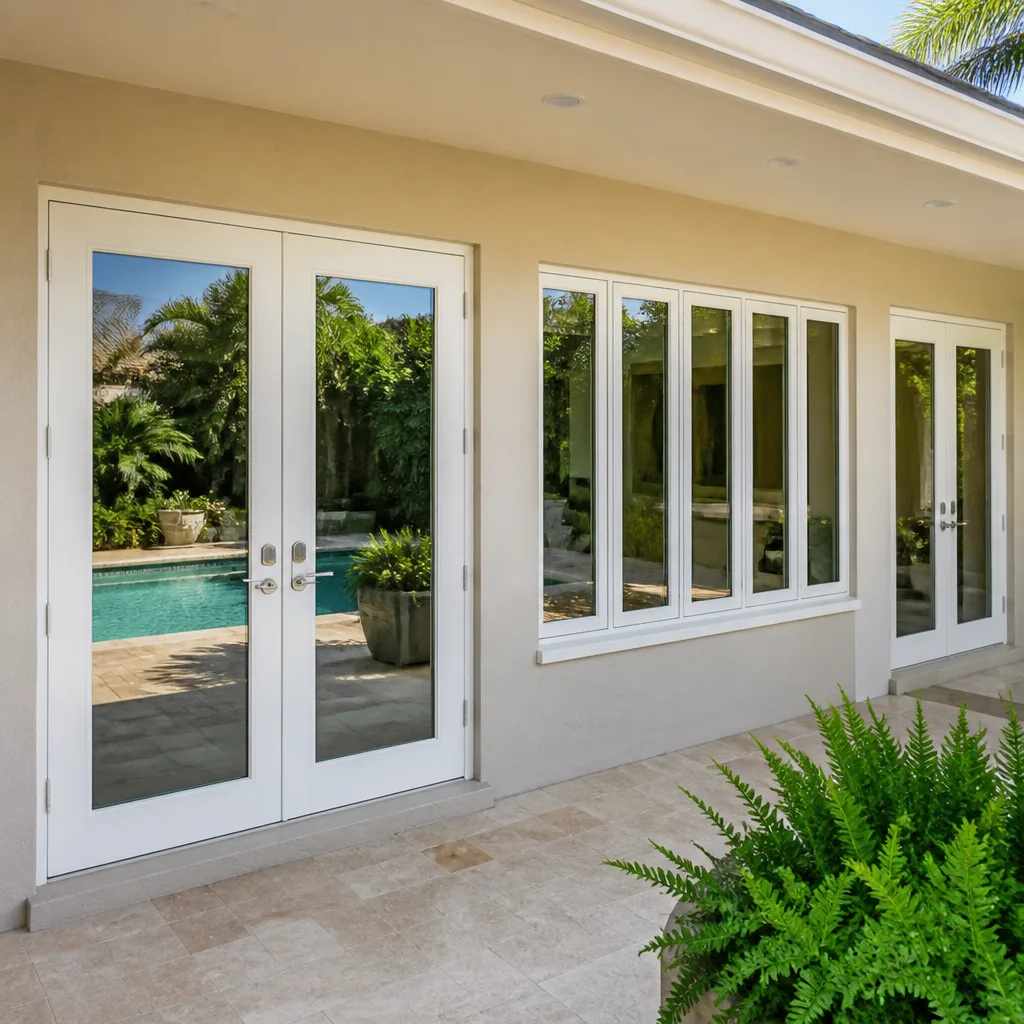 After
After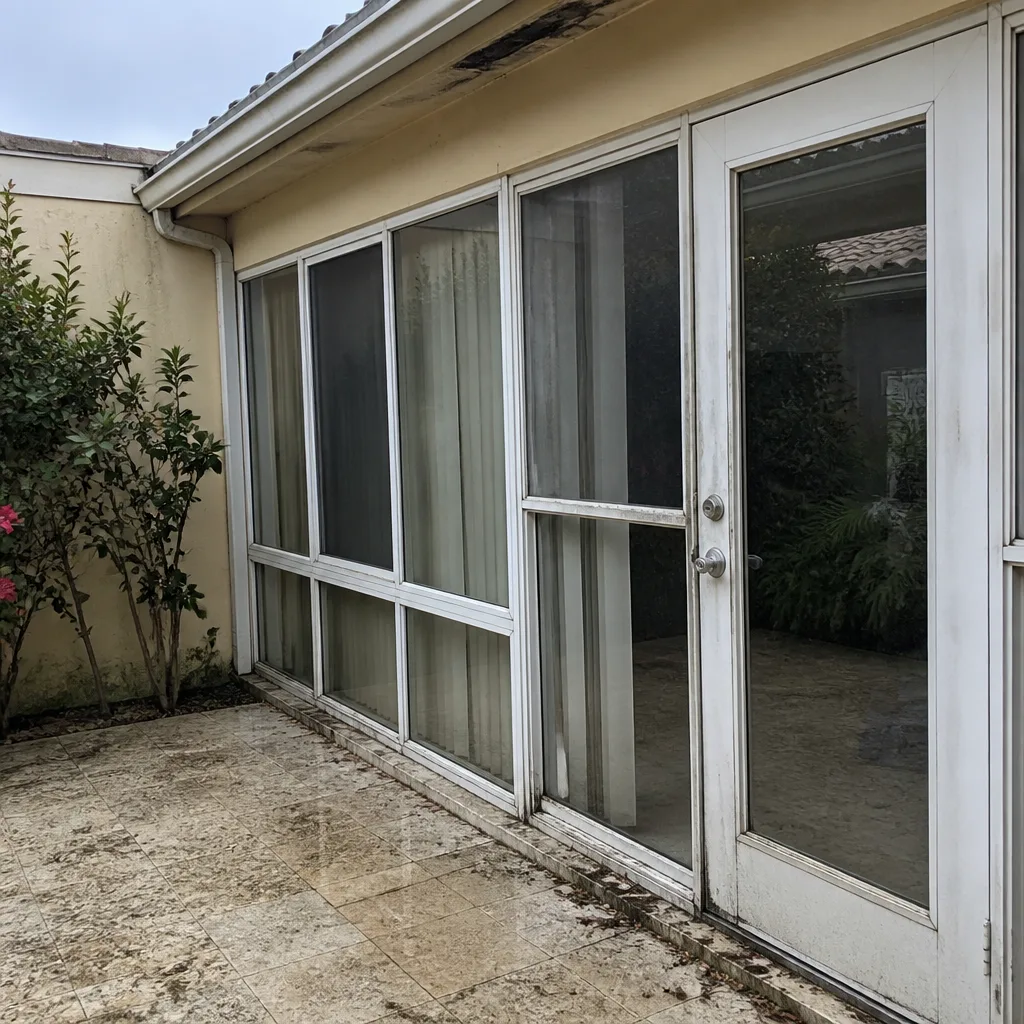 Before
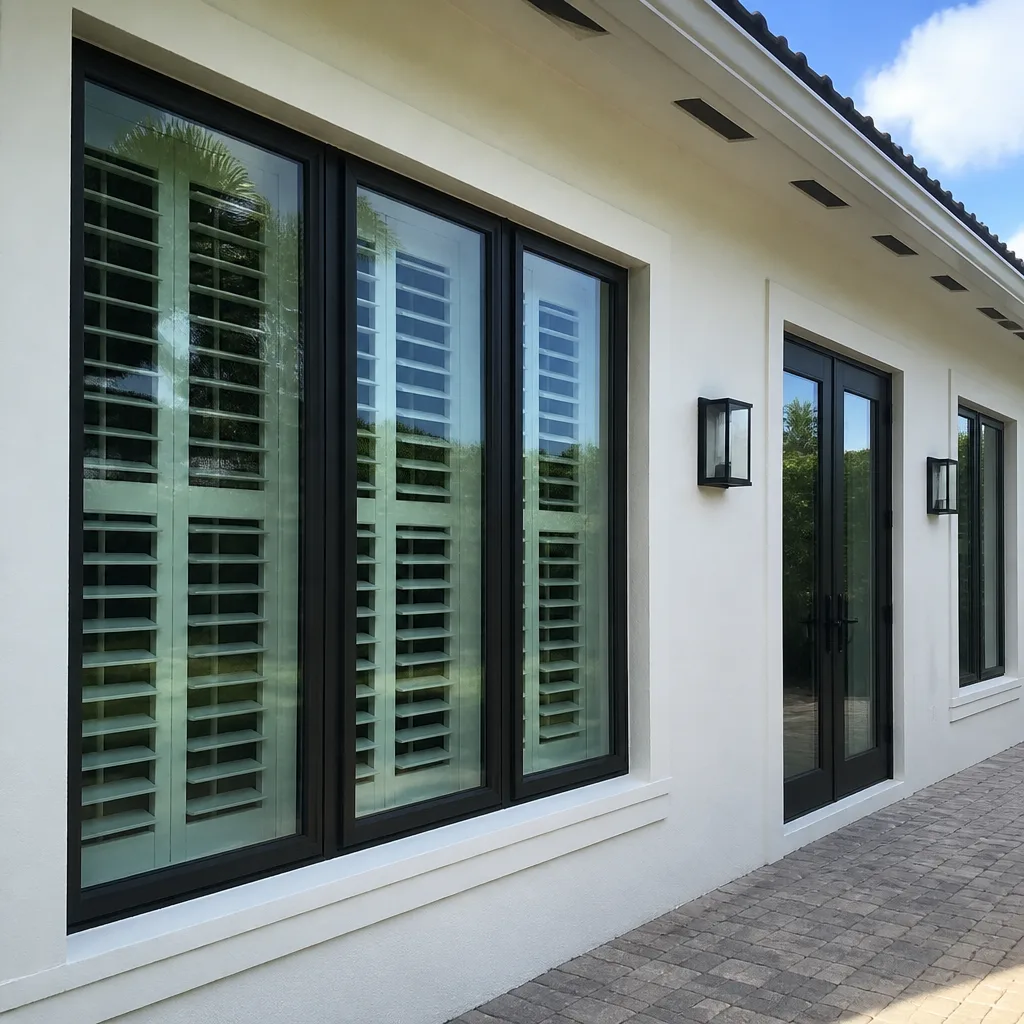 After
AfterImpact Windows Maintenance Checklist for Boca Raton Homeowners
A failed perimeter seal on an impact window doesn’t shatter the glass. It quietly lets humid, salt-laden air into your wall cavity for months before you notice the damage, and most warranties won’t cover it if you skipped annual maintenance. Our Impact Windows services are sold as low-maintenance, and they are. But “low” is not “zero,” and the handful of maintenance tasks specific to South Florida’s environment are the exact ones most Boca Raton homeowners skip until a seal fails or a frame corrodes right before the warranty expires. This checklist is built around what actually goes wrong in Boca Raton, not generic manufacturer boilerplate. You’ll learn the salt-spray rinse protocol, how to spot interlayer delamination before it voids your warranty, the 30-second weep hole test, and which tasks keep your Florida Building Code compliance intact.
Quick Answer
Impact window maintenance in Boca Raton comes down to five monthly tasks: rinse frames and weep holes to clear salt and debris, inspect perimeter seals for gaps and shrinkage, check laminated glass interlayers for haze or clouding, lubricate multipoint lock hardware every 90 days, and test drainage after every heavy rain. These take about 20 minutes total per month and prevent the two failure modes we see most often in coastal Palm Beach County: corroded frames and water intrusion behind the wall.
Table of Contents
- The Salt-Spray Rinse Protocol: Why Boca Raton Frames Fail Faster
- The 30-Second Weep Hole Test Every Homeowner Should Know
- Inspecting the Interlayer: Catching Delamination Before It Voids Your Warranty
- Hardware Lubrication: What High Humidity Does to Multipoint Locks
- Perimeter Seal Inspection: The Quiet Failure That Costs Thousands
- Florida Building Code Compliance: Which Maintenance Tasks Actually Matter for Insurance
- A Seasonal Maintenance Schedule for Boca Raton’s Climate
- Common Mistakes to Avoid
- When to Call a Professional
- Frequently Asked Questions
- The Bottom Line
The Salt-Spray Rinse Protocol: Why Boca Raton Frames Fail Faster
If your home sits east of I-95, within roughly three miles of the Atlantic, your window frames are exposed to airborne salt every single day. That salt settles into the aluminum frame channels, around the glass edge, and inside the weep holes. It’s not dramatic. It’s a fine, invisible film that builds up over weeks and months. Left alone, that film becomes a corrosion trigger, especially on aluminum frames with any minor scratch or finish imperfection.
Manufacturers like CGI and ES Windows publish maintenance guidance, but the general rinse frequency doesn’t account for Boca Raton’s specific coastal exposure. Our rule of thumb from 15 years of service calls: homes east of Federal Highway need a freshwater rinse every 30 days. Homes west of Federal Highway but east of the Turnpike can go 60 days. Homes west of the Turnpike can follow the standard 90-day cycle.
Here is the rinse protocol we recommend to every homeowner we install for:
- Use a standard garden hose with a spray nozzle set to a gentle fan, never a pressure washer. Pressure washers force water past gaskets and into wall cavities.
- Start at the top of the frame and work down, directing water along the glass channel and into the frame track. You want the water to flow the same direction rain does.
- Spend two to three seconds per window, letting water run through the track and out the exterior weep holes.
- Rinse the exterior frame face, the sill, and the area around the hardware. Salt accumulates everywhere, not just in the track.
- Leave the window closed. Do not open and rinse the interior track during a salt rinse. You’re clearing the exterior drainage path, and opening the window pulls debris inward.
- Wipe down the frame with a clean microfiber cloth if you have hard water. Boca Raton’s municipal water has high mineral content, and repeated rinse-and-air-dry cycles leave white calcium spotting on darker frame finishes.
This takes less than five minutes for a typical Boca Raton home with ten to fifteen windows. It is the single most effective thing you can do to extend frame life in our climate, and it costs nothing beyond water.
The 30-Second Weep Hole Test Every Homeowner Should Know
Weep holes are the small drainage openings on the exterior bottom edge of your window frame. They exist to let water escape. When they work, water that enters the frame track during a storm drains out the bottom and away from your home. When they clog, water sits in the track, pools against the frame, and eventually finds its way behind the wall. Clogged weep holes are one of the top three water intrusion sources we find in Boca Raton homes, particularly after the summer storm season.
A properly functioning weep hole looks like a clean, open channel. You should be able to see daylight through it when you look at the frame from a low angle. One that’s clogged is covered with dirt, sand, grass clippings, or a built-up crust of salt and mineral deposits that looks like a white or gray film.
Here is the 30-second test:
- Close and lock the window.
- Pour a cup of clean water directly into the exterior bottom track, near the center of the sill.
- Watch the exterior bottom edge of the frame under the window.
- Water should stream out of at least two weep holes within 5 to 10 seconds.
- If water pools in the track, or only a slow drip escapes, the weep holes are partially or fully clogged.
If the test fails, clear the weep holes using a thin plastic tool or a can of compressed air. Do not use a metal pick, which scratches the frame finish and creates corrosion points. After clearing, repeat the test. If water still doesn’t drain, the weep holes may be undersized for the installation, or the frame may be pitched incorrectly. Both are signs of a poor install and worth a professional look.
We run this test during every window installation in Boca Raton as part of our final walkthrough. It’s the kind of detail that separates a window that drains properly for 20 years from one that rots your sheathing in eight.
Inspecting the Interlayer: Catching Delamination Before It Voids Your Warranty
Impact glass is laminated. Two panes of glass are bonded to a plastic interlayer, usually polyvinyl butyral, which holds the glass together when a hurricane-driven projectile hits it. That interlayer is the reason the window doesn’t shatter. It’s also the component most sensitive to moisture and heat, and Boca Raton delivers plenty of both.
Interlayer delamination is what happens when the bond between the glass and the interlayer begins to separate. The earliest visible sign is a faint haze or cloudiness along the edge of the glass, usually starting at a corner. It looks almost like condensation that never dries. As delamination progresses, the haze creeps inward from the edges, and in advanced cases, you’ll see what looks like oil-slick rainbow patches or small bubbles inside the glass itself.
Here is what to check, and how often:
- Inspect every window once per month during daylight, from the interior, with the window backlit. Sunlight makes the haze visible long before interior lighting does.
- Pay attention to corners and edges first. Delamination starts at the glass perimeter. Early-stage haze at a corner is caught long before it becomes visible in the center of the pane.
- Check all four corners of every pane. South-facing windows in Boca Raton get the most UV exposure and fail first. West-facing windows are a close second because of the intense afternoon sun combined with late-day heat.
- Compare visually identical windows. If one bedroom window shows haze and the one next to it is perfectly clear, that’s not a cleaning issue. That’s the start of delamination.
Why this matters for your warranty: most impact glass manufacturers, including the brands authorized for impact windows in Boca Raton, require you to report visible delamination within a specific window of time after you first notice it. If you let edge haze sit for two years and then file a claim, the manufacturer may argue the issue was visible earlier and that you failed to mitigate. Documents matter. When you spot haze, take a dated photo and contact the installer that day.
This is also why our Windows & Doors Cost Breakdown: The Boca Raton Homeowner’s Reference for 2026 recommends keeping your original installation paperwork. The warranty clock in coastal South Florida isn’t generous. Heat and humidity shorten the practical service life of laminated glass more than any other climate in the continental U.S.
Hardware Lubrication: What High Humidity Does to Multipoint Locks
Multipoint locking systems are standard on higher-end impact doors and many impact windows from brands like CWS and ECO Window Systems. They feel great when new: the handle throws smoothly, the locking rods slide into place, and the door seals tight at the top, middle, and bottom. Then Boca Raton humidity gets to work.
The problem isn’t rust, at least not at first. It’s grime. High humidity accelerates the accumulation of dust, salt, and airborne particulates on lubricated hardware. That grime combines with the existing grease and creates a paste that thickens over time. The result is a multipoint lock that gets progressively stiffer. Homeowners compensate by forcing the handle, which bends the internal gearbox, and then the mechanism fails entirely. A lock body replacement on a multipoint door runs several hundred dollars in parts before labor. Lubrication costs about four dollars and five minutes.
Manufacturer labels generally say to lubricate annually. In our experience serving Boca Raton since 2011, every 90 days is the correct interval for anyone east of the Turnpike, and every 120 days is sufficient west of it. Humidity and salt change the math.
Here is the lubrication procedure, step by step:
- Use a dry PTFE spray lubricant. Do not use WD-40, which is a solvent, not a long-term lubricant, and actually strips away existing grease over time. Do not use heavy grease, which attracts more grime in humid air.
- Spray a small amount directly into the keyhole. The lock body is the highest-wear component and the first to bind.
- Open the door and spray the latch bolt and the locking rods visible on the door edge. Work the handle up and down four or five times to distribute the lubricant through the gearbox.
- Spray the hinges, then open and close the door fully four or five times.
- Wipe away any excess with a dry cloth. Excess lubricant on a frame exposed to Boca Raton air becomes grime paste within a month.
A well-lubricated multipoint lock throws easily with one hand. If you’re using two hands or leaning into the handle, the hardware was under-lubricated for too long. That’s not a maintenance failure at this point. It’s a replacement waiting to happen.
Perimeter Seal Inspection: The Quiet Failure That Costs Thousands
The perimeter seal is the line of sealant, usually silicone or polyurethane, that runs around the outside of the window frame where it meets the wall. It’s not the gasket between the glass and the frame. It’s the bigger, structural seal that keeps outside air and water from working their way between the window assembly and your home’s exterior sheathing.
This seal fails quietly. It shrinks, cracks, and pulls away from the stucco or concrete over the course of several years, accelerated by UV exposure and the relentless heat of a Boca Raton summer. When it fails, water doesn’t pour into your living room. It seeps behind the wall, soaks the insulation and the wood framing, and by the time you see a water stain on the interior drywall, you’re looking at real remediation: framing repair, insulation replacement, maybe mold treatment.
Here is what to look for, two times per year at least:
- Gaps between the sealant and the wall or the frame. Any visible separation, even a hairline crack, is a water path. Run your finger along the seal. It should feel continuous and pliable, not brittle.
- Shrinkage cracks along the top edge of the window. The top seal takes the most sun in Boca Raton and fails first. Check the top of every window from a ladder or from the interior with a window open.
- Caulk that has turned chalky or white. UV degradation breaks down the polymers. Chalky sealant has lost its flexibility and its adhesion. It may look intact, but it’s effectively dead.
- Any place where the sealant has pulled cleanly away in a single line. This is adhesive failure, not material failure. It means the original sealant wasn’t applied to a properly prepared surface, and it will continue to fail along that entire edge.
- Frame-to-wall attachment integrity. If the perimeter seal fails and you do nothing, water intrusion can rot the wood bucks or corrode the fasteners that hold the window frame to the structure. The window’s design pressure rating only counts if the frame is still properly attached. Inspect perimeter seals at least twice per year.
- Glass condition. A cracked outer lite or delaminating interlayer reduces the impact resistance of the assembly. Your wind mitigation credit assumes intact laminated glass. Any glass damage should be assessed by a professional immediately.
- Hardware function. Impact windows need to stay closed and locked during a storm to perform as rated. If a multipoint lock is jammed or a sash won’t fully close, the window is not doing its job. Fix hardware promptly.
- Documentation retention. Keep your product approval documents, impact rating labels, and installation records. If you file a windstorm claim and can’t prove your windows meet code, you’re in a difficult position.
- Cleaning the glass itself. Dirty glass looks bad and reduces clarity, but it doesn’t affect structural performance or insurance standing.
- Repainting exterior frame trim that isn’t part of the window assembly. Good for curb appeal, irrelevant for code compliance.
- Polishing hardware for appearance. As long as the hardware functions correctly, the finish is a personal preference.
- Freshwater rinse of all exterior frames and weep holes
- Visual check of glass edges for haze or delamination signs
- Five-second look at each perimeter seal for new gaps or cracks
- Lubricate multipoint lock hardware and hinges with dry PTFE spray
- Run the weep hole drainage test on windows that face prevailing winds
- Wipe down frame exteriors to remove salt film and mineral build-up
- Full perimeter seal inspection on every window, top and bottom
- Hardware function test: every window opens, closes, and locks smoothly
- Weep hole test on all windows and sliding glass doors
- Interlayer inspection on south-facing and west-facing windows in particular
- Photograph any concerns and contact a professional for assessment
- Check all weep holes; heavy rain drives debris into the tracks
- Inspect perimeter seals for storm-driven water penetration signs
- Test every window’s lock function
- Look for new glass edge haze or water spots that suggest seal failure
- Skipping the rinse because the windows “look clean.” Salt film is invisible. By the time it’s visible, it’s already pitting the frame finish. Rinse on schedule, not on appearance.
- Using a pressure washer on window frames. Pressure washers drive water past gaskets and into wall cavities. We’ve seen this single mistake void installation warranties. A garden hose on a gentle fan is all you need.
- Lubricating hardware with WD-40. WD-40 is a solvent marketed as a lubricant. It strips existing grease and leaves hardware dry within weeks. Use a dry PTFE lubricant instead.
- Caulking over old perimeter sealant. New sealant doesn’t bond to old, UV-degraded material. The old seal needs removal and the surface needs prep, or the “fix” fails within a year.
- Ignoring edge haze on the glass. Haze is the first sign of delamination. Early reporting protects your warranty. Waiting two years and hoping it goes away is how warranty claims get denied.
- Not documenting maintenance. If you ever file a claim, the homeowner who keeps a simple log with dates and photos looks responsible, and the one who doesn’t looks reactive. In coastal Boca Raton, that difference matters.
- Forcing a stiff multipoint lock. If the handle takes two hands, the gearbox is already failing. Every forced throw bends internal components a little more. Lubricate, and if that doesn’t fix it, call before it becomes a full replacement.
Replacing a perimeter seal is not a caulk-over-caulk job. The old material needs to come out, the substrate needs to be cleaned and primed, and the new sealant needs to be applied by someone who understands joint design. Done correctly, a new perimeter seal on a window replacement in Boca Raton should last 10 to 15 years in our climate. Done poorly, it’ll fail within 24 months and look fine the whole time.
We’ve seen too many Boca Raton homeowners who signed off on a “completed” replacement install without ever checking the top perimeter seal. By the time the water stain appeared on the interior, the warranty on the installation had expired and the original installer was gone. Check the seal before you make the final payment. Check it again every six months.
Florida Building Code Compliance: Which Maintenance Tasks Actually Matter for Insurance
Your impact windows are not just windows. They’re part of your home’s structural protection system under Florida Building Code, and your wind mitigation insurance discount depends on them remaining in compliance. That means maintenance isn’t just about longevity. It’s about keeping the protection you’re already paying for.
But not all maintenance tasks carry insurance weight. Here is the honest breakdown of what matters and what doesn’t.
Tasks that preserve Florida Building Code compliance and your insurance position:
Tasks that are purely cosmetic and carry no insurance weight:
The takeaway: the boring tasks-seal inspection, hardware function, glass condition-are the ones that protect your insurance position. The visible tasks-clean glass, pretty trim-are the ones people actually do. Flip the priority. Your insurance carrier isn’t impressed by streak-free glass.
A Seasonal Maintenance Schedule for Boca Raton’s Climate
Boca Raton has two real seasons: hot and wet, then hot and less wet. Our Seasonal Windows & Doors Care for Boca Raton: Year-Round Homeowner’s Guide shows how maintenance should follow the rain, not the calendar, but a simple schedule removes the guesswork.
Monthly (year-round, east of Federal Highway):
Every 90 days:
Before hurricane season (May in Boca Raton):
After any named storm passes within 75 miles:
This entire schedule, spread across a year, takes less time than a single afternoon. The homeowners who follow it are the ones whose windows still work correctly in year fifteen. The ones who don’t are the ones we hear from after a rainy season with water where it shouldn’t be.
Common Mistakes to Avoid
When to Call a Professional
Most of this checklist is DIY-friendly. Some of it is not. Call a professional if you see water intrusion behind the wall, persistent interior moisture around a window, glass edge haze that doesn’t wipe away, perimeter seal separation wider than a hairline, or hardware that remains stiff after proper lubrication. These are signs that the window assembly itself is compromised, and in Boca Raton, compromised assemblies become full failures fast once the rainy season arrives. Winslow Windows & Doors offers free estimates in Boca Raton. Call (561) 816-5648 and someone will answer, day or night. No voicemail loops. No call centers. You reach a person who knows impact windows and knows Boca Raton.
Frequently Asked Questions
Impact windows in Boca Raton should be rinsed with fresh water at least monthly for homes east of Federal Highway, and every 90 days for homes west of the Turnpike. The rinse matters more than soap-and-water glass cleaning, because it clears salt and debris from the frames and weep holes. Interior glass cleaning is cosmetic and can be done on whatever schedule keeps you happy. Call (561) 816-5648 if you’re not sure which schedule applies to your home’s coastal exposure.
A clogged weep hole looks like a blocked or crusted-over drainage opening on the bottom exterior edge of the window frame, often covered with sand, salt film, or grass clippings. A properly functioning weep hole is a clean, open channel you can see daylight through. Pour a cup of water into the exterior track; if water doesn’t stream out the bottom within 10 seconds, the weep holes are clogged.
No. Pressure washers force water past the frame gaskets and into the wall cavity, and that moisture damage is rarely covered by warranty. Use a standard garden hose with a gentle fan setting instead. The goal is a rinse that clears salt and debris, not a pressure blast that compromises the seal.
The first sign of impact glass delamination is a faint haze or cloudiness along the edge of the pane, usually starting at a corner and most visible when the window is backlit by sunlight. Advanced delamination shows as rainbow-like patches or small bubbles inside the glass. Document what you see with a dated photo and contact your installer immediately, because most manufacturers require prompt reporting when the haze first appears.
Yes, the maintenance tasks that preserve structural integrity-perimeter seal inspection, hardware function, and glass condition-directly affect your wind mitigation insurance position. A window with a failed seal or a broken lock is not performing as the Florida Building Code rating assumes. Cosmetic tasks like glass cleaning have no insurance impact.
Multipoint locks in South Florida should be lubricated every 90 days, not annually as most manufacturer labels suggest. Boca Raton’s humidity and airborne salt combine with lubricant to form a grime paste that stiffens hardware faster than in drier climates. Use a dry PTFE spray, never WD-40. Call (561) 816-5648 if lubrication doesn’t restore smooth operation.
The Bottom Line
Impact windows are the single best investment a Boca Raton homeowner can make for storm protection, energy savings, and long-term home value. But they only perform as rated when the frames are rinsed, the weep holes are clear, the hardware is lubricated, the seals are intact, and the interlayers are sound. Those five tasks take less than 30 minutes per month and protect both your warranty and your insurance position. Skip them, and the failure is quiet, slow, and expensive, usually surfacing right after the warranty would have covered it. You don’t need a maintenance degree. You need a schedule and the discipline to follow it. And if you spot something that doesn’t look right, Winslow Windows & Doors home is one call away. Ed’s name is on the door, and it’s on every job we do. The one down the road.
Written by Ed Winslow, Owner at Winslow Windows & Doors, serving Boca Raton since 2011. For more guides & resources, visit our blog.
Six Reasons Homeowners Choose Winslow Windows & Doors
Impact systems engineered to design pressures up to +/-100, matched to your wind zone - your openings hold when the storm arrives.
Low-E insulated impact glass from our manufacturer lines commonly cuts monthly cooling bills 20-30%.
Laminated impact glass shuts out up to 40% of outside noise - traffic, neighbors, weather.
Monitoring services run $30-90 a month. Laminated impact glass resists forced entry around the clock, with no subscription.
Florida homeowners average around 25% savings on the windstorm portion of their policy after protecting every opening - some homes qualify for more.
A full impact package upgrades curb appeal, buyer confidence and appraised value in one project.